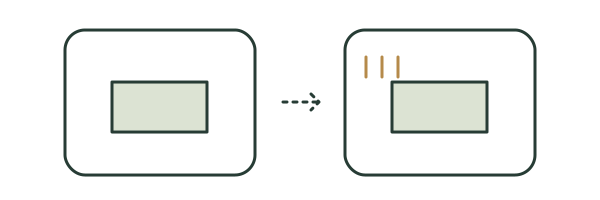
Bring a change into view
Elevated temperature, humidity or repeated mechanical use can increase the rate of certain changes. The choice depends on what is being studied. A material exposed to heat is answering a different question from a component undergoing repeated movement. The test conditions must connect to the expected environment if the observations are to inform an estimate of useful life.
The shortcut needs evidence
Accelerated time is not simply calendar time at a faster speed. A relationship between test conditions and ordinary conditions has to be justified. Materials can respond differently to moisture and temperature, so a convenient conversion factor is not automatically appropriate for every composition. Real-time aging observations help assess whether the accelerated study represents the behavior that matters.
Separate observation from prediction
A report might describe a change after exposure, then use a model to estimate a longer period. Read for the material tested, exposure conditions, property measured and assumptions behind the prediction. An estimated lifetime depends on more than the directly observed change.