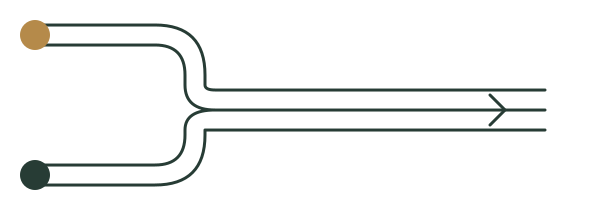
A route for a liquid
A microfluidic device contains passages and chambers through which a liquid can move. Glass and polymers are among the materials used to make these structures. Instead of transferring a large sample between separate containers, a channel network can bring small volumes into contact at chosen locations. The layout becomes part of how the experiment is organized.
Control matters as much as size
Pressure can drive flow through the passages. Channel dimensions, the fluid's viscosity and the applied pressure influence its movement. Temperature and concentration also matter when characterizing a sample. A small device therefore still needs careful measurement: a compact footprint does not automatically make a measurement accurate. Flow calibration provides a reference for checking what an instrument reports.
Read the whole arrangement
Connections, pressure sources and instruments may sit outside a chip. When reading about a microfluidic system, ask what volume it handles, how flow is controlled and where the result is measured.